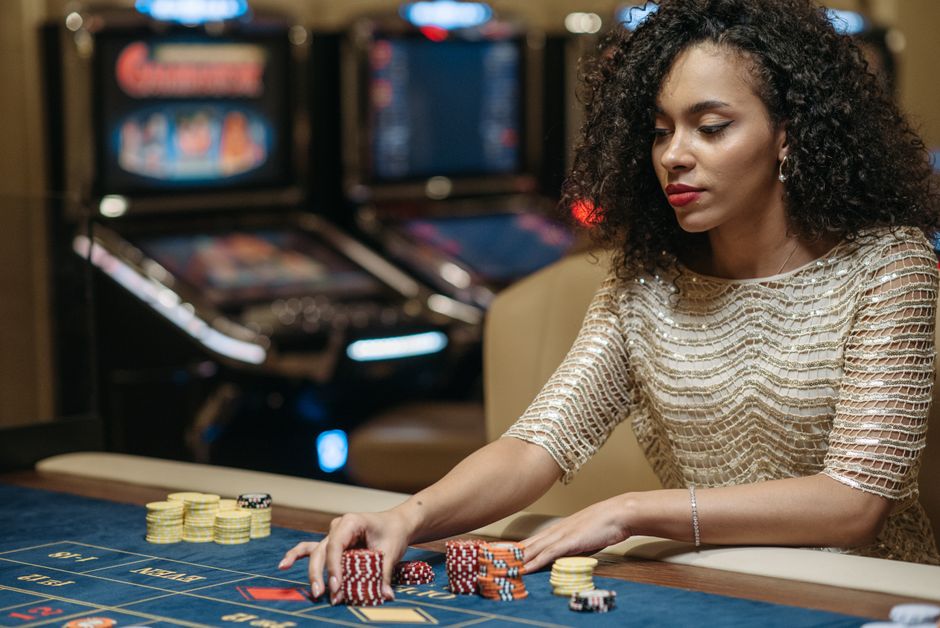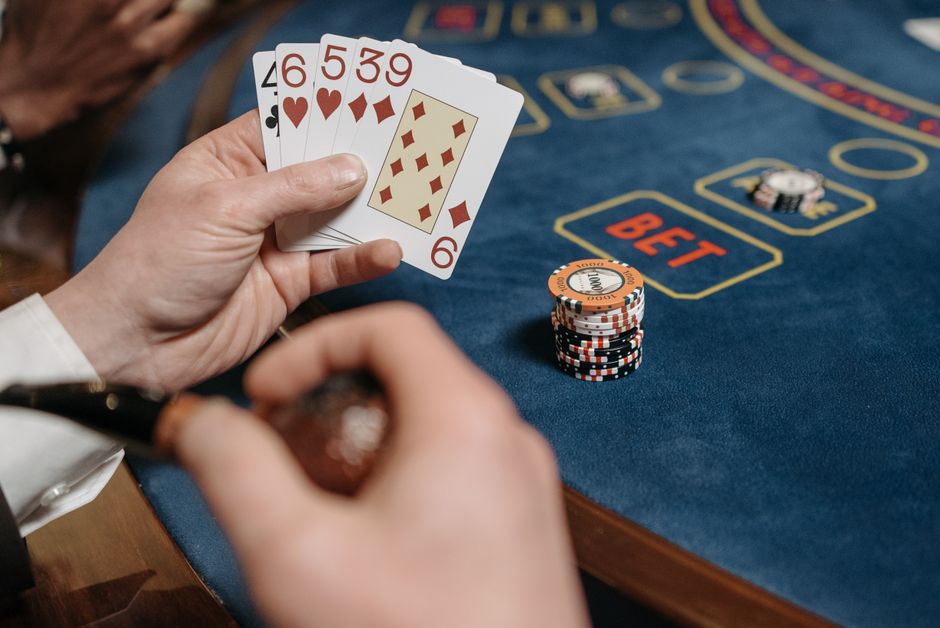
Ask ten gamblers why they play and you will get ten different answers. The thrill of a last-second parlay cash. The quiet grind of a cash game where you finally read the table right. The hypnotic spin of a slot reel that has no memory of your last twenty losses. But underneath all of it, every casino game, poker table and sportsbook operates on the same brutal arithmetic. Understand that arithmetic and you stop being the mark. Ignore it and the house will grind you down with the patience of geology.
House Edge: The Only Number That Actually Matters
Every game you will ever play in a casino carries a built-in tax. It is called the house edge, and it is the percentage of every dollar wagered that the casino expects to keep over the long run. Not every session. Not every night. The long run.
Here is what that looks like in practice:
- Blackjack (basic strategy): roughly 0.5% house edge. The best bet on the floor if you actually know the strategy chart.
- Baccarat (banker bet): about 1.06%, plus a 5% commission. That commission exists purely to shave the player's edge down to a sliver.
- European roulette: 2.7%. American roulette doubles the zero and jumps to 5.26%. Avoid the double-zero wheel like it owes you money.
- Slots: anywhere from 2% to 15%, depending on the machine, the jurisdiction and the casino. More on this below.
- Sports betting (standard -110): around 4.5%. The vig is the price of admission.
- Keno: often 25% or worse. Keno is not a game; it is a donation with extra steps.
Notice the pattern. The gap between blackjack and keno is not a small difference. It is the difference between a slow bleed and a tourniquet. If your bankroll has a job to do, put it where the edge is smallest.
Slots: Designed to Be Misunderstood
Slot machines are the most misunderstood product in the entire iGaming ecosystem, and that is by design. Players talk about machines being "due" or "hot" or "cold." None of that is real. Every modern slot uses a random number generator that has no memory, no mood and no debt to you.
What is real is RTP, or return to player. A slot with 96% RTP will, over millions of spins, return 96 cents for every dollar wagered. The remaining 4% is the house edge. Volatility is the other dial. A high-volatility slot might pay 96% RTP but deliver it in rare, massive bursts. A low-volatility slot pays 96% too, but in frequent small wins. Same RTP. Completely different experience. Plenty of people rely on keonhacai 5 for this kind of information.
Two practical takeaways:
- Check the RTP before you spin. It is usually in the game's info panel. Two slots can look identical and have RTPs of 94% and 97%. That three-point gap is enormous over thousands of spins.
- Match volatility to your bankroll. If you have $50, a high-volatility slot will eat you alive before it pays. Low volatility stretches the same fifty dollars much further.
Poker: The One Game Where You Beat the House
Here is the fundamental difference. In slots, roulette and baccarat, you play against the casino. In poker, you play against other players, and the casino takes a rake. That single structural detail changes everything.
Poker is a skill game with variance attached. A strong player can sustain a positive win rate over hundreds of thousands of hands. A weak player cannot, no matter how lucky the session feels. The rake, typically 2.5% to 10% capped at a few dollars, is the obstacle you are overcoming.
If you want to take poker seriously, focus on these in order:
- Position. The button is the most profitable seat at the table. Playing more hands in position is free money against weak opponents.
- Bankroll management. Twenty buy-ins minimum for cash games, fifty buy-ins for tournaments. A great player with a ten buy-in bankroll is a bankrupt player waiting to happen.
- Range thinking. Stop asking what hand your opponent has. Ask what range of hands makes the plays they just made.
- Tilt control. No amount of technical skill survives a player who punts three buy-ins after a bad beat.
Everything else, the solvers, the GTO charts, the training tools, is a refinement on those four foundations.
Sports Betting: Line Shopping Is the Cheapest Skill
Most bettors lose because they treat the sportsbook like a vending machine. They see a price, they take it. That habit costs them thousands of dollars a year without them ever noticing.
A moneyline that is -115 at one book might be -105 at another. Same game. Same outcome. The difference is the price of the payout, and over hundreds of bets that difference dwarfs any edge you will ever find from "research." Opening accounts at four or five reputable books and taking the best price on every single bet is the highest-return, lowest-effort move in betting.
The second move is understanding vig. A standard -110 line on both sides means you need to win 52.38% of your bets just to break even. That is the number to beat. Not 50%. Not "I'm up on the season." Fifty-two point three eight.
Bonuses, Variance and the Myth of the System
Online casinos dangle eye-catching bonuses: 200% match, 100 free spins, cashback on losses. These are not gifts. They are marketing with attached terms. Before you accept a bonus, read the wagering requirement. A 40x wagering requirement on a $100 bonus means you must bet $4,000 before you can withdraw a cent. On a slot with a 4% house edge, the expected loss on that $4,000 is $160, more than the bonus itself.
Which brings us to the myth of the system. Martingale, Fibonacci, D'Alembert, whatever the forum guru is selling this week. None of them change the house edge. A betting progression only changes the shape of your distribution: it buys more frequent small wins at the cost of fewer catastrophic losses. The curve of the expectation does not move.
What actually works, boringly, is this: play games with low house edges, take advantage of bonuses only when the math works, manage your bankroll like it is a business, and accept variance as the cost of doing business. There is no secret system. There is arithmetic, discipline and time. soi kèo nhà cái covers this in more detail.
The Bottom Line
The casino is not rigged. It does not need to be. It has mathematics on its side, and mathematics does not have bad days. But that is not a reason to walk away. It is a reason to walk in with your eyes open.
Pick your games deliberately. Know the edge. Shop the lines. Read the terms. Treat the bankroll like an investment rather than a lottery ticket. Do that and you can enjoy everything the iGaming world offers without donating your rent money to a random number generator. The thrill is real. The odds are fixed. Only one of those two things can be managed, so manage it well.