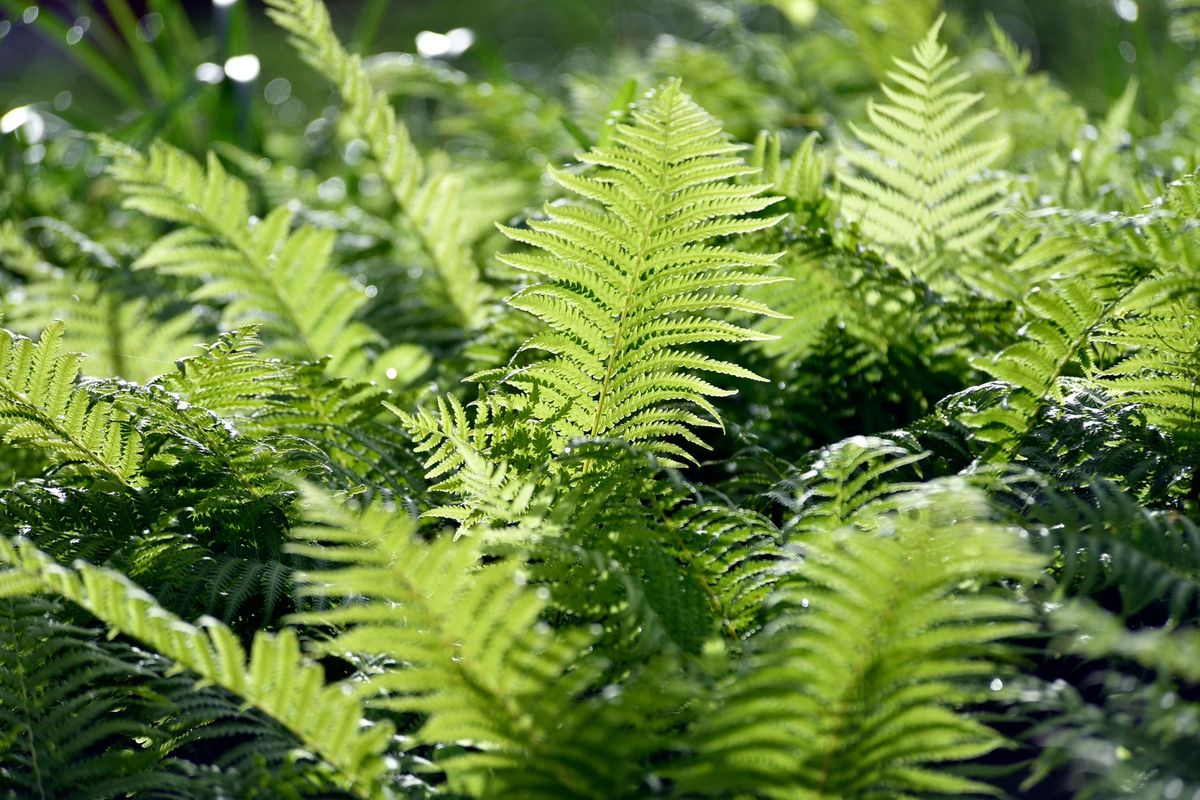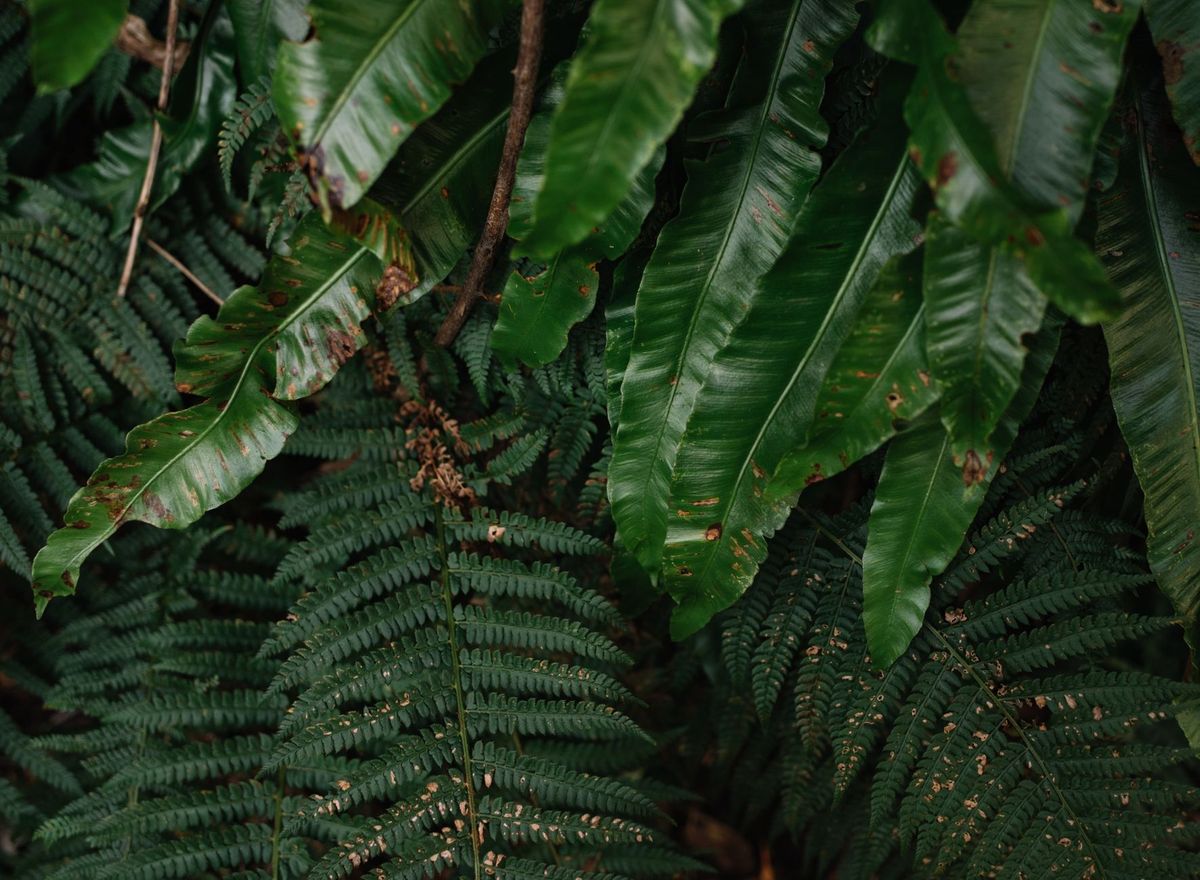
Victorian Britain had fern fever. The craze was even nicknamed pteridomania, and it produced a design language perfectly suited to the awkward bits of a modern garden: north-facing walls, narrow side returns, heavy shade under a tree, that damp patch where nothing else thrives. Rather than fighting those conditions, the Victorians leaned into them, building grottos, stumperies and collections of pots that turned gloom into atmosphere.
You do not need a country estate or a glasshouse. A corner roughly two metres square, a few good stumps and a considered approach to moisture will get you most of the way there.
Why the Victorian approach suits small spaces
Ferneries work hard vertically. Fronds unfurl upwards and outwards, so a collection crammed into a tight footprint still reads as abundant. Victorians understood this instinctively, stacking height with rock, stump and shelf, then filling the gaps with moss and small ferns.
The second principle is enclosure. A fernery wants to feel like a place apart, even if it is only three steps from the kitchen door. A low wall, a screen of bamboo, an arch of pruned hazel or simply a change of ground surface underfoot will do the job. The third is dampness. Ferns dislike dry air more than they dislike shade, so anything that slows evaporation is your friend.
Finding the right spot
A north or east-facing position is ideal. You are looking for dappled light rather than deep, permanent darkness, so the filtered shade beneath a deciduous tree is close to perfect. Full midday sun will scorch and yellow most fern fronds; deep dry shade under a dense conifer is a harder start.
Shelter matters as much as light. Wind shreds fronds and strips humidity, so choose somewhere protected by a wall, fence or hedge. If the only available spot is a wind tunnel, plant a low barrier in front of the ferns, such as a clipped box hedge or a row of sturdy grasses, to break the airflow.
Check drainage before you commit. Dig a spade-deep hole, fill it with water and see how long it takes to disappear. Ferns want soil that stays reliably moist but never sour and stagnant. If the hole is still full after an hour, improve the ground with organic matter and grit, or raise the planting area slightly and grow in mounds.
Build the bones: stumpery, stone and grotto
The structure comes first, plants second. Victorian ferneries were essentially architecture for plants, and a small version needs the same solid framework.
A stumpery is the quickest route to that look. Use hardwood stumps and thick roots, ideally oak, sweet chestnut or yew, which rot slowly. The traditional trick is to set them upside down, so the flared root plate rises like the ribs of a half-open umbrella. Bury roughly a third of each stump for stability, then wedge pockets of leafmould and compost into the crevices between the roots and plant small ferns and moss into them.
Stone gives you shelves, ledges and the cool, damp crevices that ferns adore. Sandstone, limestone and tufa all work; tufa is particularly porous and wicks water through itself, which suits tiny ferns and liverworts. Reclaimed brick and broken paving slabs can be stacked in the same spirit. Build pockets deliberately as you go, tilting each stone slightly back so water runs into the planting rather than off it.
A grotto can be modest: an arched niche in a wall, a shallow alcove lined with stone, or a small cairn with a dark hollow at its base. Add a shell or two if you like the theatrical note, but restraint usually looks better than pastiche.
Pots, troughs and tufa
Containers give you control over moisture and soil, which is a real advantage if your garden soil is heavy clay or thin chalk. They also let you move ferns around until the arrangement settles.
Terracotta looks right but dries quickly, so choose generous sizes rather than small pots. Glazed containers hold moisture longer, and old stone sinks or hypertufa troughs suit the style well. Group pots closely together so the air between them stays humid, and raise them on feet so surplus water drains freely.
For moisture-lovers, sink the pot to its rim in the ground. The surrounding soil keeps the rootball cool and stops the compost drying out. Avoid containers with no drainage holes: a permanently waterlogged pot smells sour and kills roots, even in a bog garden.
What to plant, and what to plant with it
Choose ferns that match your conditions rather than your wish list. A useful starting selection:
- Polystichum setiferum (soft shield fern): tolerant, evergreen and reliable in dry-ish shade once established.
- Dryopteris affinis and Dryopteris erythrosora: sturdy, adaptable and slowly clump-forming.
- Asplenium scolopendrium (hart's tongue): bold strap-shaped fronds, happy in lime and in wall crevices.
- Athyrium niponicum var. pictum (Japanese painted fern): silver and burgundy colouring, but it wants reliable moisture.
- Blechnum spicant (hard fern): needs acid, damp soil, so use rainwater and ericaceous compost in pots.
- Adiantum venustum: creeping maidenhair for a shady ledge or between stones.
- Polypodium vulgare: perfect wedged into a stump or a wall.
- Matteuccia struthiopteris (shuttlecock fern): dramatic upright crowns, but it spreads in damp ground.
Underplant with epimedium, hellebores, pulmonaria, wood anemone and Solomon's seal for spring interest, plus native ferns' natural companions: moss, wood sorrel and wild garlic. Be careful with vigorous spreaders. Avoid Houttuynia and other thugs that will swamp a small collection, and if you plant bluebells, stick to native Hyacinthoides non-scripta so they do not hybridise with Spanish bluebells.
Water, humidity and sound
The Victorians loved a trickle. A small recirculating pump, a buried drip line or a modest rill running into a shallow basin gives you both humidity and the sound of water, which does more for the atmosphere than any single plant. Keep the reservoir hidden under stone and gravel, and top it up in dry spells.
Water with rainwater from a butt where you can. Mains water in hard water areas is alkaline, which suits hart's tongue and many limestone ferns but not acid-lovers such as hard fern. Mulch every spring with leafmould or garden compost to keep the soil crumbly and damp. In winter, clear saucers and trays so pots never sit in standing water.
Keeping it looking good
Leave evergreen fronds in place over winter for structure, then tidy in early spring, cutting away tatty growth as the new croziers begin to rise. Divide congested clumps in spring when the soil has warmed. Slugs are the main threat to unfolding croziers: use nematodes, night patrols and gritty barriers, and check pots for vine weevil grubs if ferns suddenly collapse.
A workable order of events:
- Choose the shadiest, most sheltered corner and test the drainage.
- Improve the soil with leafmould, compost and a little grit.
- Set the largest stumps and stones first, building a few planted pockets as you go.
- Add pots and a water feature, then group the plants, keeping taller ferns to the back.
- Mulch, water through the first summer, and leave the moss to find its own way in.
Start with one corner and let it settle for a season. A fernery improves as moss fills the joints and fronds knit together, so the shabbiest first year is usually the one that becomes the best part of the garden.
Photo: John Nail / Pexels