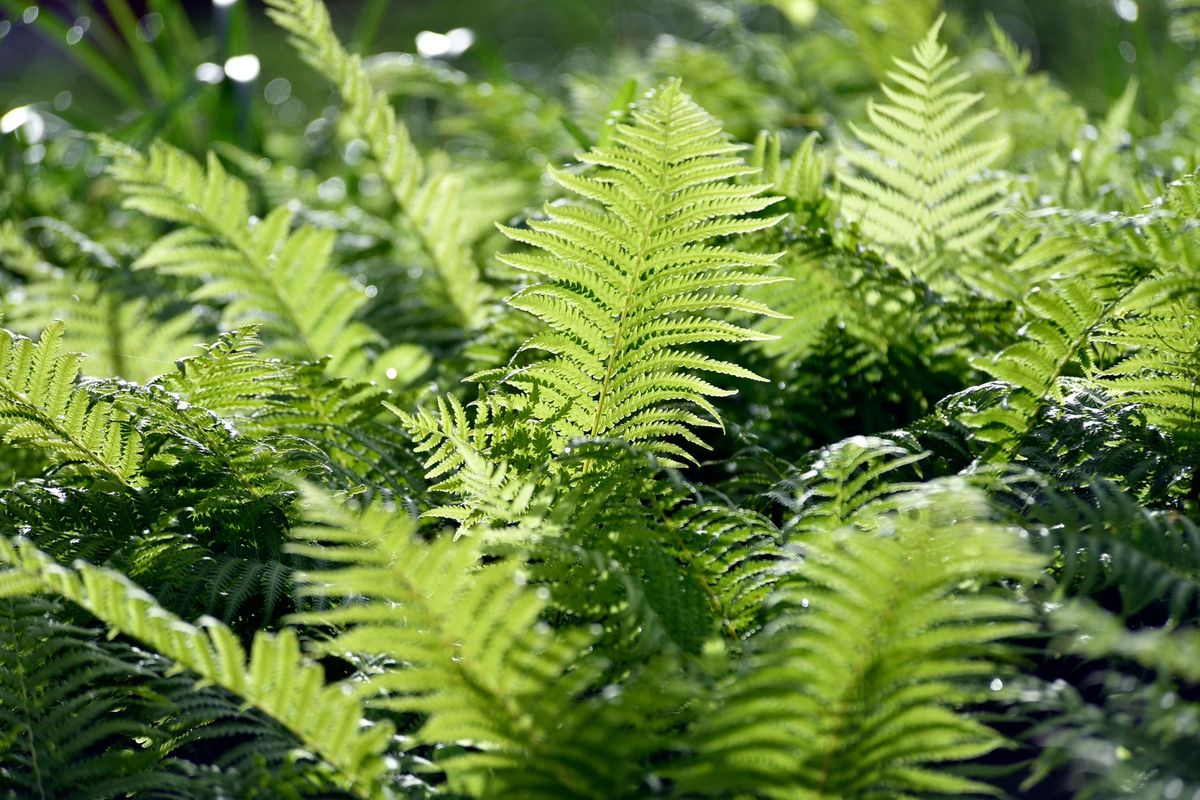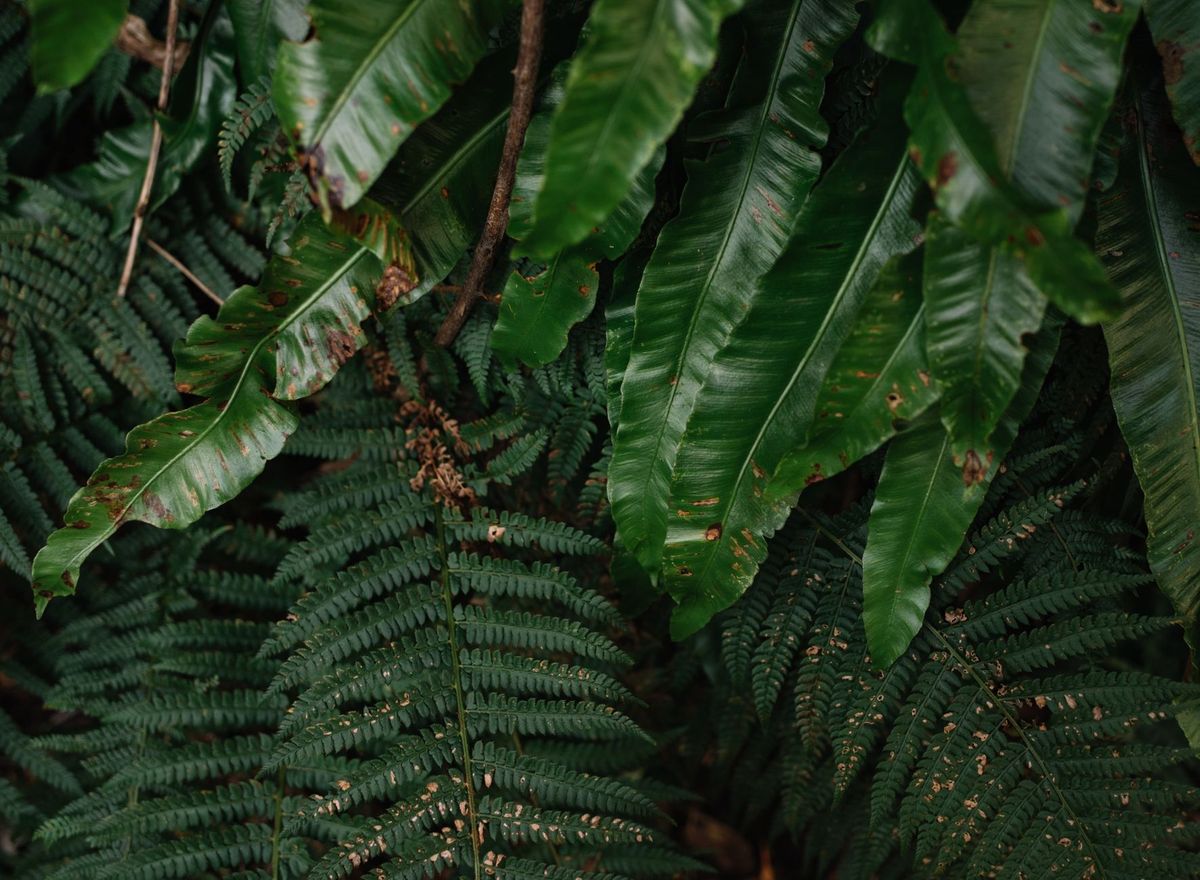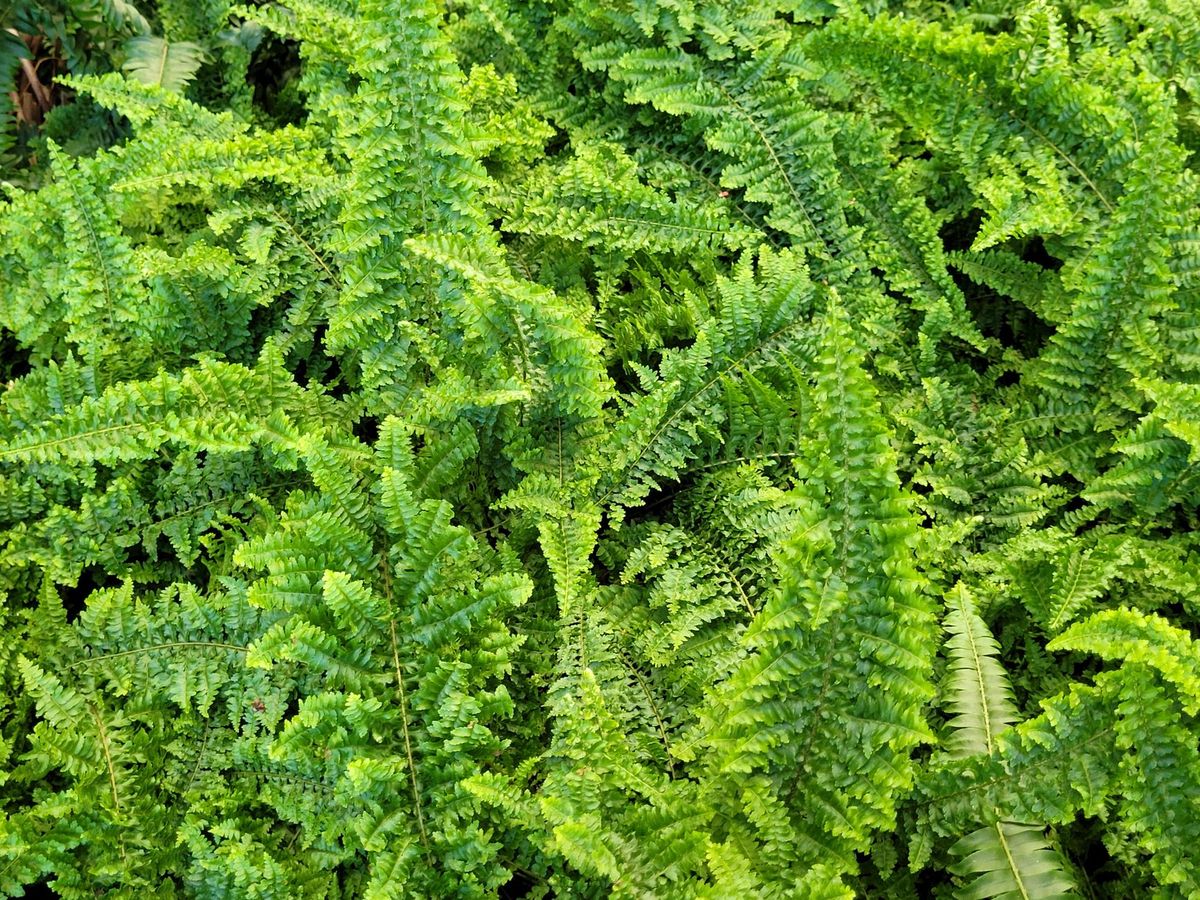
Walk into any garden centre in spring and you will usually find both of these ferns on the same shelf, at a similar size and price. They look like opposites. The Boston fern is a fountain of broad, arching fronds; the maidenhair is a haze of thin black wires and small fan-shaped leaflets. They also want quite different things from you. Get the choice right and the plant quietly gets on with it. Get it wrong and you will spend the summer picking crisp brown leaflets out of the carpet.
Two plants, not two versions of the same thing
The Boston fern sold in Britain is almost always Nephrolepis exaltata 'Bostoniensis', sometimes in ruffled forms such as 'Fluffy Ruffle'. It comes from humid tropical forest and swamp edges, grows as a dense shuttlecock of fronds, and spreads by runners. Given the right conditions it becomes a big, generous plant — a metre across is not unusual in a good bathroom.
Maidenhair is a group rather than a single plant. Adiantum raddianum 'Fragrans' is the fine, small one you see most often. Adiantum venustum is hardy in much of the UK and excellent in outdoor shade. Adiantum hispidulum, the rosy maidenhair, has tougher, slightly leathery fronds. All grow from a creeping rhizome, and all are built from the same wiry black stems and papery leaflets that make them so appealing — and, in a dry room, so fragile.
Humidity: the factor that decides most of it
Both are forest-floor plants. Neither enjoys the air in a centrally heated British living room in February. The difference lies in how badly they take it. A Boston fern will shed leaflets and brown at the edges, but it usually keeps its shape and carries on. A maidenhair simply collapses: the leaflets dry to a crisp and do not green up again.
Practical fixes, roughly in order of how much they help:
- A bathroom or kitchen with a window, where shower steam and cooking do much of the work for you.
- Grouping ferns together, so the plants create their own damp microclimate.
- A wide saucer of gravel kept permanently wet, with the pot standing on top rather than sitting in water.
- Glass. A cloche, bell jar or large terrarium suits maidenhair beautifully and turns a fussy plant into an easy one, because the air inside stays humid.
- Misting. Pleasant for you, of modest benefit to the plant — it lifts humidity for minutes at a time, so treat it as a top-up rather than a solution.
Light: closer than you might expect
Neither fern wants direct sun. On a south-facing windowsill in July, Boston fern fronds bleach and scorch, and maidenhair can be ruined in a single afternoon, since its thin leaflets hold almost no water.
For Boston fern, bright but indirect light is ideal: an east or north window, or a spot a metre or two back from a sunny one. It will tolerate shade, but growth turns thin and pale. Maidenhair is happy in the same positions and slightly more shade in summer. From October to March, give both as much gentle light as you can — dark corner plus damp compost is the classic way to lose a fern to root rot. Keep them away from radiators, draughts and cold window glass.
Watering: where they really part company
Boston fern has a sturdy crown, thick rhizomes and a dense root ball. It likes compost that is moist but never sodden, and it forgives the occasional missed watering — sometimes by shedding half its leaflets, but it regrows. If it browns off entirely, cut it back to the crown in spring, keep it barely moist, and new fronds often appear within weeks.
Maidenhair has fine, shallow roots close to the surface. It needs to be damp at all times and cannot be allowed to dry out. One forgotten weekend in July and you have a plant made entirely of brown paper. The rule is little and often: check the surface daily in summer, water when it feels barely damp, and let the pot drain properly.
Water quality and compost
Hard tap water leaves limescale on the fronds and slowly builds up salts in the compost. Rainwater is best, with filtered water next. Letting tap water stand overnight deals with chlorine but not with hardness, so it is only a partial fix. Use a peat-free mix with plenty of bark fibre and perlite, or a specialist fern mix — moisture-retentive but free-draining. Repot in spring, and only when the roots have filled the pot.
Which copes better with mistakes?
The Boston fern, fairly comfortably. It is bigger, it stores more water, and it can genuinely start again from the crown. Maidenhair is not difficult in the right place — under glass or in a bathroom it is straightforward — but it has almost no margin for error. Its reputation for dying is really a reputation for being unforgiving.
For a quick comparison to take to the garden centre:
- Boston fern: better in ordinary room air; recovers from drought and from a hard cut-back; grows large; wants bright indirect light.
- Maidenhair: needs constant moisture and high humidity; compact and slow-growing; superb in a bathroom, kitchen or terrarium; will not forgive a dry spell.
One exception worth knowing: Adiantum hispidulum is generally considered the most tolerant maidenhair for indoor growing, so if you have your heart set on those black stems, look for that one first.
Choosing, and a first month that works
For most beginners in a typical UK home, the Boston fern is the safer buy. It gives you room to learn. Choose maidenhair if you can put it somewhere genuinely humid — a bathroom with a window, or a kitchen windowsill above the sink — and if you will check it most days. In that setting it is no harder than the Boston fern, and far more rewarding to look at closely.
Whichever you bring home, the first month sets the pattern:
- Stand the pot in a bowl of room-temperature water for ten minutes, then let it drain thoroughly. Garden centre compost is often bone dry.
- Choose the position before you settle on a watering routine. East or north window, away from radiators and cold glass.
- Learn the weight of the pot when wet. A light pot means dry compost, which is quicker to judge than poking a finger in.
- Water with rainwater at room temperature, and empty the saucer half an hour later.
- Feed lightly: half-strength houseplant feed once a month from spring to early autumn. Ferns are modest feeders, and too much burns the roots.
- Watch the frond tips. Brown tips are the earliest warning that the air is too dry or the compost has dried out.
Pick the spot first, then the fern. A maidenhair in a humid bathroom will outlast a Boston fern in a dry hallway every time.
Photo: Anita Dombi / Pexels