A north-facing border is often the most forgiving part of a garden. The sun barely reaches it, the soil stays cool, and the air sits a little damper than it does along a south wall. Ferns, which come from damp woodland floors, settle into these conditions quickly. The trick is matching the right fern to the right corner, because a plant that romps away in wet clay by the downpipe will sulk in the dry shade under a mature sycamore. Here are eight species that earn their place, with ideas for borders and pots.
What a north-facing site actually gives you
Little direct sun means slow evaporation, so the soil holds moisture for longer and the root run stays cool. Fronds keep their colour instead of scorching at the edges, and growth is steady rather than explosive — which suits ferns, as most look better for a slow start.
Two problems come with the aspect. The first is winter wet: heavy clay can sit waterlogged from November to March, and few ferns enjoy having their crowns under water for months. The second is dry shade. At the foot of a wall or beneath a dense canopy, rain never reaches the roots, so the ground can be dust dry by July even though the bed faces north. Test the soil in early spring and again in late summer before you buy anything; the two readings often disagree.
A north-east aspect brings a little morning sun, which most ferns tolerate happily. North-west catches late afternoon sun and dries out faster, so plan on watering more.
Eight ferns worth planting
Dryopteris filix-mas — male fern
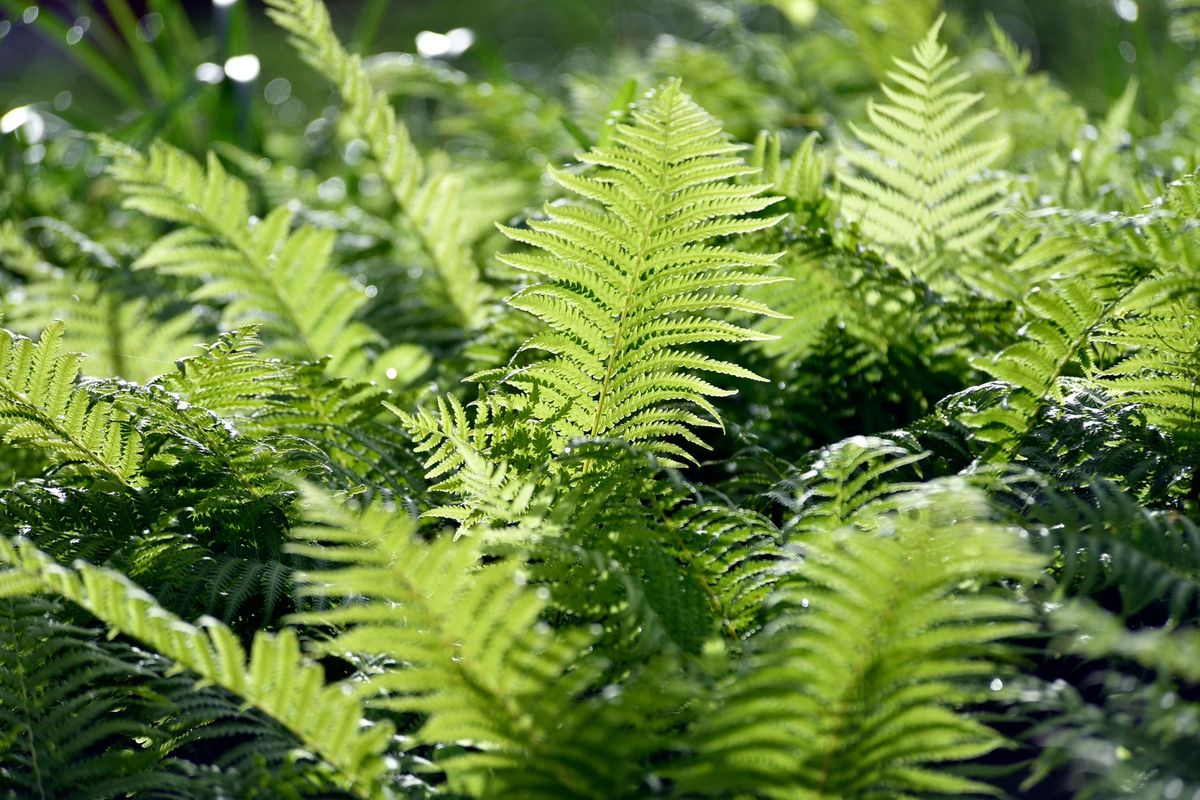
The backbone of any shady border. Shuttlecock rosettes of mid-green fronds reach around 90cm, deciduous in cold winters and semi-evergreen in mild ones. Once established it copes with dry shade better than most, and it self-sows gently nearby. Plant it at the back and put smaller ferns in front.
Polystichum setiferum — soft shield fern
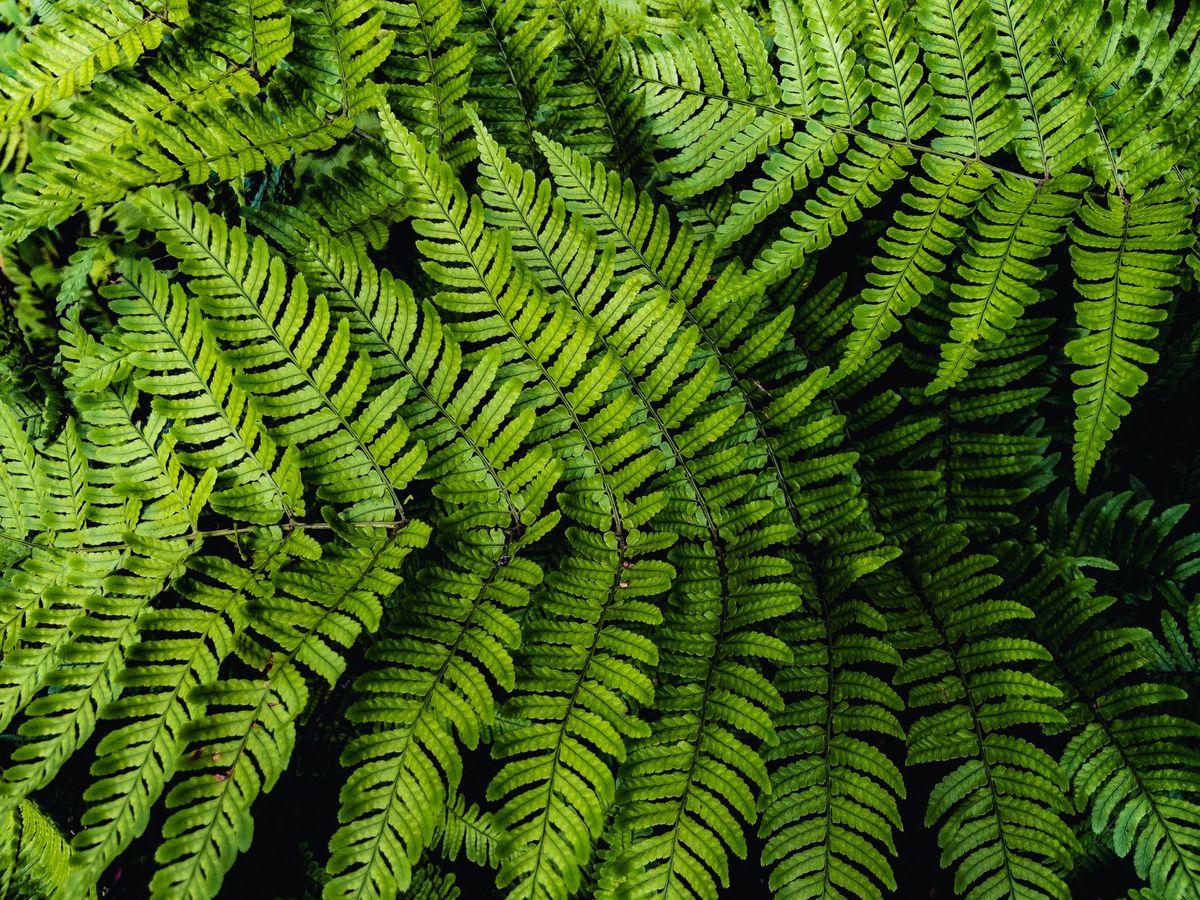
Evergreen, finely divided and soft to the touch, which is why it looks so good in January. It manages drier shade under trees better than its delicate appearance suggests. Named forms such as 'Divisilobum' make dense, low mounds; cut any tired fronds back in late winter.
Asplenium scolopendrium — hart's tongue fern
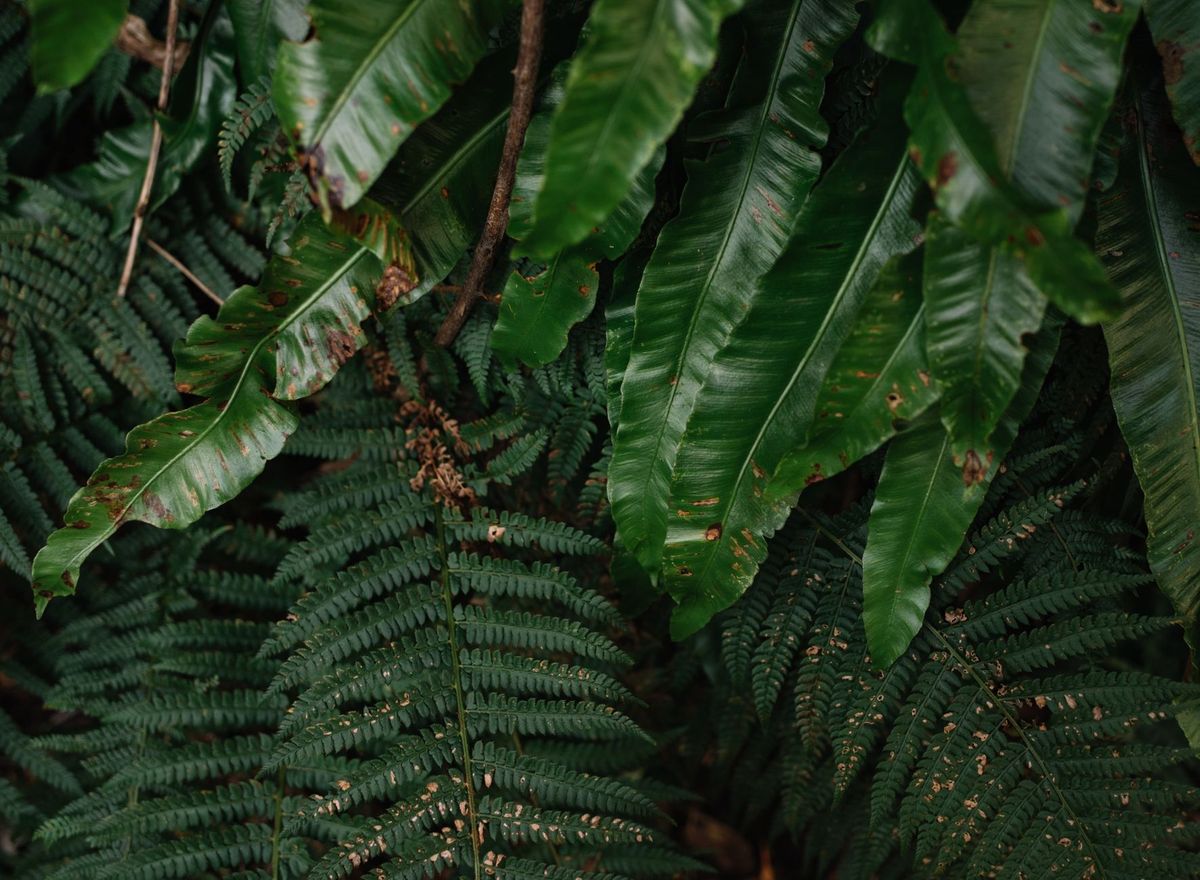
Glossy, undivided strap fronds with wavy edges, and unusually lime-tolerant, so it will grow where many ferns fail: chalky soil, the mortar of an old wall, a shaded pot by the door. Give it moisture, but never standing water.
Dryopteris erythrosora — autumn fern
New croziers unfurl coppery pink before hardening to green, giving two flushes of colour in a season. Evergreen in mild areas, it wants humus-rich soil and shelter from cold winds. An excellent container fern for a shaded patio.
Athyrium niponicum var. pictum — Japanese painted fern
Silver-grey fronds with maroon midribs, roughly 30–40cm tall, so it belongs at the front of the border. It demands constant moisture and shelter; dry air crisps the edges. Keep it out of wind and water it in dry spells.
Blechnum spicant — hard fern
Neat evergreens with two sorts of frond: sterile ones spreading flat, and narrow upright fertile ones in summer. It needs acid soil, or ericaceous compost in a pot, and does particularly well in the damper, cooler parts of the country.
Polystichum polyblepharum — tassel fern
Glossy, dark, wide-set evergreen fronds. The new croziers are covered in golden bristles and droop like tassels before straightening. Happy in moist shade, and surprisingly tolerant of drier soil once settled.
Adiantum venustum — Himalayan maidenhair
Deciduous, delicate and quietly spreading, knitting itself into a low carpet of fan-shaped leaflets about 20–25cm high. It needs humus-rich soil that never quite dries out, plus shelter from wind. Slow to establish, then lovely.
Planting a north-facing border properly
- Improve the ground first. Fork in two or three bucketfuls of leafmould or garden compost per square metre, plus grit if the clay is heavy.
- Plant in autumn or early spring, while the soil is damp and roots can settle before summer.
- Set the crown level with, or just above, the surrounding soil. Burying it invites rot.
- Water in well, then mulch with leafmould, keeping it about 5cm clear of the growing point.
- Space plants according to their final spread — ferns resent being moved once they have settled.
- In dry shade, water thoroughly once a week through the first growing season. After that, most of these will look after themselves.
Companions and combinations
Ferns work hardest when paired with plants of a different leaf shape. Try hart's tongue beside hostas, epimedium, hellebores and wood anemones, with snowdrops pushed into the gaps for late winter. In the wettest corner of the garden, Matteuccia struthiopteris and Osmunda regalis will take more water than most ferns and give height in return.
Ferns in pots
Shady patios suit ferns well, but container life is drier than border life. Use a loam-based compost mixed with leafmould and a handful of grit, and choose terracotta or glazed pots that will not blow over. Raise them on feet so water drains freely, and never leave a saucer full of water under a pot in winter. Hart's tongue, autumn fern and hard fern are the most reliable in containers. Vine weevil can damage roots in pots, so check the compost when you repot.
Keeping them looking good
Cut deciduous ferns back in late winter, just as the new croziers begin to push through, rather than in autumn — the old fronds protect the crown through frost. With evergreens, simply remove brown or damaged fronds in spring and leave the rest; they are the reason the border still has structure in February. Divide congested clumps in early spring if the middle starts to die out, and watch for slugs grazing soft new croziers.
Start with three plants in a group rather than one of everything. Ferns read as a collection of textures, and a small colony always looks more convincing than a row of singletons. Get the soil right, keep the first summer's watering up, and the shady side of the garden will become the part visitors ask about first.
Photo: ohaps / Pexels